Dealership EV charging, without the complexity.
EVready® Energy designs, installs, and manages EV charging built to meet your OEM requirements and keep demand charges under control — one partner, end to end.
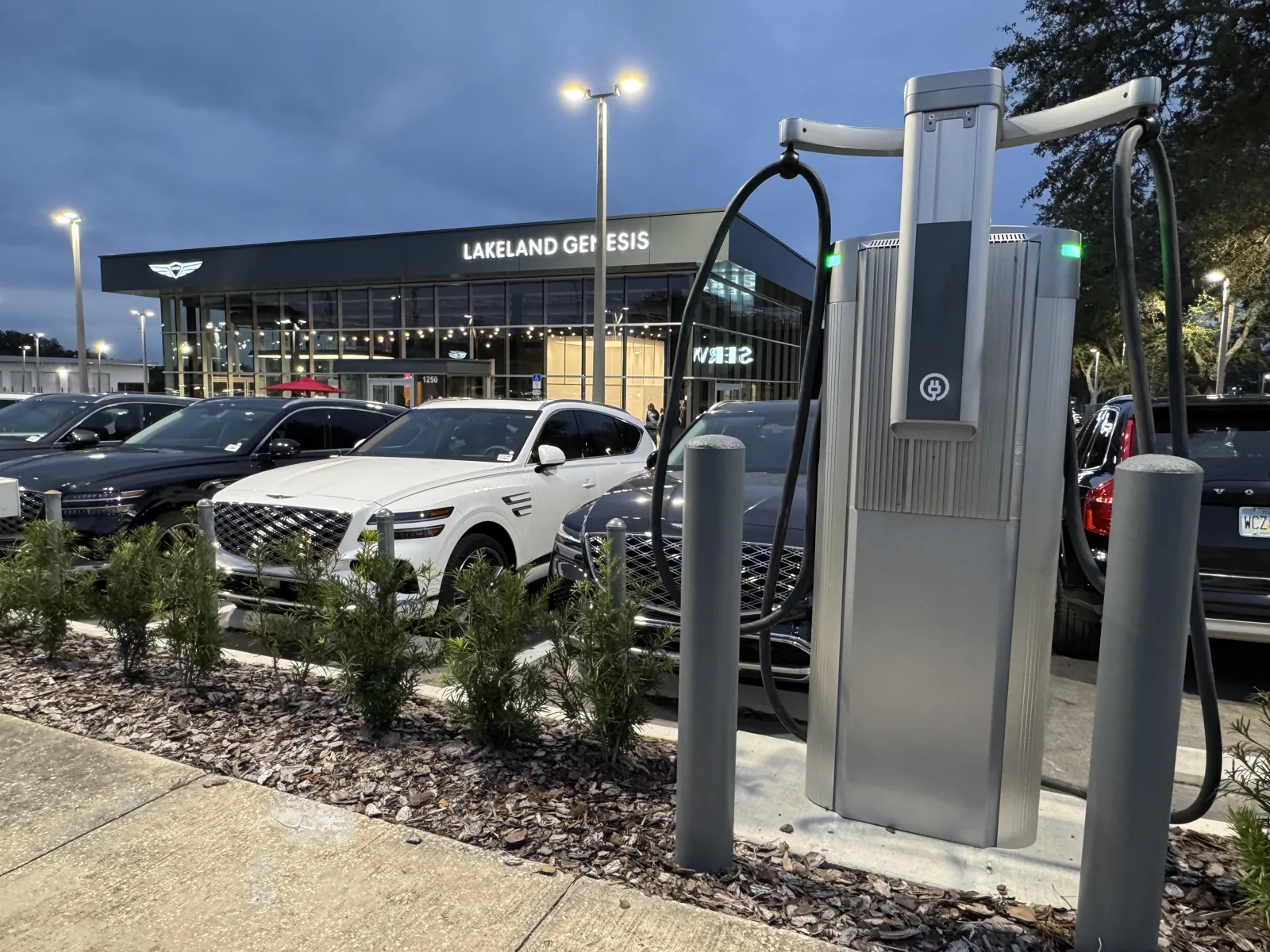
Here's the call we get more than any other: a dealership GM, 90 days after install, wanting to know why their electric bill just doubled. The chargers are working fine. The OEM is happy. But no one told them that four DC fast chargers — even sitting idle most of the day — would spike their demand peak high enough to add $3,000–$8,000 a month in utility fees.
That's the demand charge problem. Most installers don't warn you about it because they're not accountable for your operating costs — only your build cost. We are. That's why every EVready dealership engagement includes energy planning before the first wire is pulled, and Energy Guardian after the last one is.
EVready has completed roughly a dozen dealership builds in Canada and serves franchised dealerships across the US — from single-point operators to regional groups.
Built for the way dealerships actually operate
You need chargers that satisfy the manufacturer, don't blow up the power bill, and don't become your team's second job. That's the whole point of working with a specialist.
OEM-compliant by design
Tesla, ChargePoint, and brand-specific dealership mandates handled correctly the first time — no failed inspections, no rework.
Demand charges, controlled
The hidden cost of charging is your peak load. Smart load management and energy software keep it down — often tens of thousands saved a year.
One turnkey partner
Strategy, design, permitting, installation, and ongoing management under one roof. Electrification, simplified.
Incentives mapped for you
We identify the federal Section 30C credit plus state and utility programs your site qualifies for, so the net cost lands well below sticker.
From first call to charged-and-managed
Assess
We review your site, OEM requirements, utility tariff, and goals on a short strategy call.
Design
Charger mix, electrical capacity, load plan, and incentive stack — engineered to spec and permitted.
Install
Certified installation managed end to end, coordinated around your operations.
Manage
Energy management software keeps uptime high and demand charges low, long after go-live.
What will dealership EV charging cost you?
Ballpark hardware, install, and the Section 30C credit in under a minute — then get a site-specific quote.
Questions dealers ask us
How much does EV charging cost for a dealership?
Do dealerships qualify for the Section 30C tax credit?
Which OEM EV charging requirements does EVready support?
Will adding EV chargers spike our electric bill?
How long does a dealership EV charging installation take?
Let's map your dealership's charging plan
A 30-minute strategy call gets you a clear picture of costs, incentives, OEM compliance, and timeline — no obligation.
Schedule an EV charging strategy call →Installing the chargers is only half the equation.
The other half is the utility bill — and it's where charging projects quietly get expensive. Demand charges (what the utility bills you for your highest spike of power, not how much energy you use) can be the single largest line item on a charging site's monthly statement.
Energy Guardian measures, manages, and monetizes your charging load so peak demand — and the bill behind it — stays under control. It's the difference between chargers that cost you every month and chargers that pay their own way.